Developing Empathy Skills within Relationships


In the age of sharply increased narcissism, empathy is a dying art.


Bad Seeds…

True Alpha males make shitty relationship partners. Their well established brand of endless string of short-term failed relationships and prepotency for fast fused-quick to fizzle marriages are a pure testament to this, as are the baggage laden train wrecks that follow in their wake. While the alpha attraction triggers female hypergamy on many levels, it fails to transition into appropriate nurturing roles which are critically needed to sustain long-term committed relationships. Their low emotional quotient (EQ) plays out as they tend to find themselves to be constantly at odds with others, in a state of being angry, stressed and frustrated, acting out in a controlling manner, which ultimately leads people to push away and tune them out. Ask any child of an overbearing parent.

Remove the Negatives First

It will be no surprise to most to know that empathy is one of the main components of emotional intelligence and that empathic people are skilled in placing themselves inside the shoes of others and seeing the world through another person’s perspective. The problem isn’t the awareness of the skill, but their implementation that stymies people. In trying to improve almost anything it is vastly more effective to remove a detriment than add an accruement. As such we’ll discuss first behaviors that should be removed or reduced.

Lack of Role Models

Our exposure to multiple role models to gather and develop early behavioral traits and reference points for learning social skills is fundamental in our development as adults, as those without them will be at a severe disadvantage to learning appropriate ones, as they will be ignorant of them or exposed to poor ones. Additionally individuals embracing a arch-type that is obsolete can be more detritus than not having an acceptable one, as the individual will need to let go of their false belief system first prior to learning and developing new skill sets, which never seems to happen without a major life crisis. In this regard family structure, the quality of parenting and exposure to appropriate social culture cues largely prepare and determine one’s preliminary social skill sets, to include empathy, leadership abilities along with many others.

At a Drop of a Hat

Sadly empathy is sacrificed when we are upset, angry, disappointed or frustrated. We must not only fight this natural impulse, but to be well aware how our lack of empathy at these times tends to make the most horrific, life impacting emotional wounds when we fail to control ourselves and lash out on blind compulsion. We need to be aware of how we influence our relationships by not only what and how we say what we do, but the manner and regard for how we care for the people we are interacting with when emotions have put so much at stake. While a liberal use of diplomacy and tact is called for a clear sign that we should be on point is any time anger, frustration or disappointment first raises it head.

Double Standards

We all know the ‘Golden Rule’ of treating others the way you would want to be treated, but are we really holding ourselves to the standard we place on other’s behaviors to you? Would you find your behavior acceptable if someone else did it to you? It is all too common to leave our own behaviors unobserved, but they are precisely the behaviors in which are most visible to others and as a consequence of this human trait, leave us incredibly vulnerable to their impact on the relationship. It is important to remember that one can be empathic, validate another person’s view point and yet still disagree. An important step in doing so is developing a personal boundary of dropping any double standards that may exist.

Relating Instead of Understanding

In a misguided attempt to relate and thus foster a sense of rapport and connection with others, we will often try to relate to what they are saying in our own lives and then share that. While fine on occasion it can lead to a situation where the speaker does not feel they are being truly herd or listened to and comes across as a ‘me-too’ type of one-upmanship conversation. Left un-checked it can have negative impact on the relationship, as it is a detriment to shared understanding, as the comparison does little to foster greater insight or further the rapport with the speaker. Instead of proffering a similar comparison, ask a simple question of ‘what did that mean to them?’, ‘How did that make them feel?’ or ‘why was that important to you?’ can go a long way in fostering the connection we think we’re trying to make.

Not Being Present

The less we are being in the moment, truly utilizing the skills of actively listening, the harder it is to tune into other people’s feelings and intentions, which is critical to providing emotional support, as they are communicating them. In our rush to project ahead, to get to the bend in the conversation and to frame our response, we completely lose sight of the reason of our conversation in the first place, sharing information as a means to build, maintain and sustain the relationship.

Accentuating the Positive

Having removed many of the common obstacles to greater empathic understanding and relating with our partners, we can progress into understanding common traits that will enhance and further our empathic skills which will serve to strengthen these important emotional bonds.

Drop Your Agenda

A central part of being present is setting aside your beliefs, concerns and dropping your personal agenda in order to fully hear what your partner is saying. It is the skill of going into a conversation without expectations, without goals of fixing or resolving issues first. Our presuppositions muddy the communication and our thinking process. Our only agenda is listening to our partner’s feelings, sentiments, points of view and reference points in attempts to understand where they are coming from and what they are trying to express. We are listening to gain their perspective. Once we have listened and we’re sure they have been heard correctly can the communication progress from there.

Getting Beyond the Facts

Most of us consider listening to be made up of clearly able to understand the ‘Who, What, Where, When , Why and How’ of what is being communicated, but fail to take into true account the speakers emotional state, energy, tone and body language as they are communicating. These social clues can be imperative to developing a connection and understanding between the parties, as much as the words expressed. Frequently what being said isn’t nearly as important, as what’s not being said, but otherwise communicated. Learning to fully watch, as well as to listen to our partner strengthens the connection between the cognitive and emotional brain which leads to deep emotional rapport that is defined as empathic connection.

An Indian’s Moccasins

In actively listening to our partner we are trying to place ourselves in their shoes, to see the situation from their position, their emotional standing point and how that is affecting them. If you are unsure, it is completely reasonable and beneficial to simply ask… ask them ‘How do you feel about that?’ ‘What does that mean to you?’, ‘Do you mean that you feel…X?’ etc… learning to use open-ended questions regarding thoughts, feelings and beliefs can not only clarify an issue but bring underlying driving issues to the forefront, often these will be issues surrounding emotional needs.

Relate to their Inner-Child

In times of high contest, immense emotional fray, over-whelming pressure and expectations we are faced with a situation that has created a barrier to communication and connection that seem insurmountable. At times like these a simple and effective strategy of visualizing our partner as their vulnerable inner-child we can lower and lessen our defenses, that will then allow us to preserve the relationship and communicate in an effective way. It is by a combination of seeing through our partner’s presence for the vulnerable person that they are and defusing the emotional intensity that we can then focus on the issue at hand without being distracted by the enormity of them or the situation.

If we want our partners to appreciate what we are communicating, if we want them to respond to and work cooperatively with us, then we must consider their perspective, how they perceive us, how they perceive how they’ve been heard and how they’ve been received by what they’ve expressed . Utilizing empathy is key element within this whole process of communication, emotional needs expression and grounding and solidifying the relationship.

 

Consensus Skills Development in a Relationship


Nothing is more obstinate than a consensus

In any relationship and partnership decisions have to be made. Mundane ones are seldom questioned and have marginal consequences and thus will not be the center of our discussion here. Our focus will be on the manner in which decisions are made where the outcomes will be questioned and the consequences of those decisions will be felt not only in the context of problem solving, but the ripples felt through the relationship because of them and the process taken to get there.

Decisions are journeys

Too often the experiences going through decisions and processes of getting there far outweigh the actual decisions themselves. Question that presumption? How did you feel when your parents said “because I said so!” to any protest to an authoritarian and dominate decision they made? How effective were they in getting your buy-in, cooperation and commitment to those decisions? How did that shape your relationship with them; strengthen it or weaken it? Has your apple fallen far or close to the family tree in that regard? Family tree should branch out, not only genetically, but also with variation, adaptation and selection of skill sets and abilities of its members. What’s yours look like; a straight line? If it does, you’re responsible for changing that. Learning the finer arts of diplomacy, as well as developing team work through collaboration, can be essential skills to have in any relationship.

A agreement by another other name

Consensus building is simply collaborative problem solving. Collaboration is where you work together to explore and determine the nature of a problem and possible solutions, but developing a consensus is the process of creating an agreement and the act of making a decision collaboratively.

Participant identification and recruitment

The first step to developing any consensus is identifying the appropriate participants. The key step here is to identify who should be involved in the process and to recruit them into it. You better have a firm grasp of when your partner expects to be taken into account with a decision or not. If you don’t know or not sure, do the smart thing and ask. Better yet, have a discussion with your partner to help determine those boundary areas and issues when it comes to decision-making authority, both yours and hers.

Determine the stakeholders

Developing a consensus is about finding the stakeholders, not developing a data bank of wisdom dispensers. Aunt Edna may be wickedly wise, but just because she could be involved (and likely would LOVE to be) doesn’t mean she should be involved. Developing a consensus is about finding the critical stakeholders needed to develop a sound and accountable decision. There is a massive difference between seeking advice and developing a consensus. Just because you’re seeking someone’s advice doesn’t mean you’re seeking them as a stakeholder. If you don’t have that as a boundary, and are able to monitor and maintain that, you should. Think in-law problems and this is the gap in boundaries in which those problems are breached.

Design the process to be used

Not all problems need to be resolved in the same manner or to the same degree, but having a methodology and rationalization to decision-making sure helps. Every couple who have found themselves in the endless cycle of “I don’t know, what do you want to do?” has no methodology or rationalization for decision-making. Flipping a coin, taking turns, rock-paper-scissors are basic examples that can quickly and effectively cut to the chase in many areas, but often we need more elaborate and caring methods to determine and develop an agreed upon decision to truly more important issues.

Reframing and brainstorming

Reframing and brainstorming are alternative approaches to problem solving. Often disputants get situated in a position which leaves little room to negotiate let alone to come to agreement upon. Reframing the issues in terms of interests, which tend to be negotiable will prevent this natural stalemate. Another approach is brainstorming alternative approaches to the problem. The key point here is to develop new, and mutually advantageous approaches rather than going over the same win-lose approaches that have been tried before with no success. The emphasis in both of these approaches is to develop a better level of understanding and trust necessary to develop any agreement upon, active listening skills and emotional needs communication will typically figure prominently here.

Identification and evaluation of alternative solutions

In developing a consensus it is important to evaluate carefully the alternative solutions, not only for the cost-benefit analysis of that proposed solution, but to the nature of the your relationship with the proposer, as often they are highly invested in their proposition and fail to separate the value of the proposal from their perceived value in themselves. Care, handling and consideration of the stakeholders are as important, as the decision itself. A decision that cost you the trust and respect of a stakeholder isn’t a good one, even if the solution is the best one. If you have to, go back and regain that trust and respect before making any decision. How different would your life be if your parents had done the same thing with you?

Decision making

Most decisions are difficult to make not because the cost-benefits cannot be determined, analyzed or weighed, but that the barriers to implementation have been overlooked. We simply spend no time in understanding and removing impediments to taking action. Spending time to determine what these may be, how they may be removed or lessened can be instrumental in getting the decision implemented, which was the sole purpose of developing a consensus to begin with; determining a course of action and implementing it.

Finalization and approval

The last step before actually taking action and implementing any decision or solution is to finalize it and seek the approval of all participants and stakeholders. This is important not only in clarifying the proposed solution, but to give each stakeholder time to ponder any last harboring doubts or concerns before being committed to a decision. Often this determines whether or not there will be buy-in from each of the parties. Too often people will go through a process, but no provide buy-in required to make and keep a given decision, claiming a misunderstanding or miscommunication in the process. This last step is designed to limit and prevent those counter-productive behaviors.

If you don’t have your partner’s buy-in, you don’t have a consensus and you’re operating without a net of mutual agreement. Any decision being made will be yours and yours alone. As such you’ll face all the blame and accountability for any failure to deliver upon any expected solution, as well as, built-in hostility and animosity associated with going it alone. Risks like these should be few and far between in any healthy relationship, rather than the norm of masculine assertiveness and boldness in decision-making or misguided displays of leadership.


Collaboration Skills

“It is the long history of humankind those who learned to collaborate and improvise most effectively have prevailed.” – Charles Darwin


With the advancement of modern society and culture there have been remarkable adjustments within previously well-defined sex roles, the nature of leadership within relationships and expectations within them. Women today are by and large expecting an equitable stake in decision-making and demanding that their insights, opinions and interests be represented in most decision-making processes, while being equally insistent that the man, ‘be the man’ in the relationship. Clinging to old masculine stereo-types of leadership and decision-making agency and authority are severely outdated, and won’t be accepted or tolerated for long. How then is a man today to take the gender assigned role of leadership, to make decisions without being authoritarian and overly dominate? The answer lies squarely within the concept of ‘partnership’, which takes into account equitable stake consideration and collaboration with any decision-making process to resolve an issue. Relationships today are truly more about partnership than an a pairing.

Defining intentions

Collaborative leadership means developing compelling shared goals, and providing inspiration throughout the process. Often the initial problem or goal isn’t the issue at all, but the conflicting and unspoken criteria upon which the solution will be judge will be. Understanding what that framework is, is critical to developing mutual agreement to any given situation. This groundwork is crucial, as often the problem being addressed usurps the goal of maintaining and furthering the relationship. This will get you nowhere, quick. Having an agreed upon purpose and buy-in from your partner is essential for collaboration to work.

Discussing the problem

Learn to let go of the outcome, avoid taking it personally and focusing on the project, not your ego is necessary to clearly discuss any issue. For example, neither of you is going to give a shit if you go out for dinner and have Italian or Chinese tonight, but you will both remember how the other made you feel when coming to that decision. Being wary of breaks in the flow of communication, which occur where the flow of information is halted, as people talk and listen to each other, where one person says something that sounds critical or otherwise threatening to the other… Breaks disrupt natural harmony and problem discussion. Learn to prevent them to sort out what the real issue and objective is.

Gain an understanding of the underlying interests

Actively listen. Being able to accurately state your partner’s intent, view-point, concerns and goals with trying to solve the issue before moving on. When we collaborate, we listen deeply to everyone involved, we make sure their voices are heard, measured and appreciated. Doing so tells your partner they are valued, respected and trusted. Within that process and context new ideas and risks we take in proposing them, that normally would not have otherwise taken, can emerge as possibilities.

Learn to spot when the conversation is getting emotional

Being able to read and manage the emotions of your partner when collaborating, to make it safe again to continue meaningful dialogue, is essential to maintain collaborative flow… Turbulence in a dialogue flows occurs when negative emotions become too highly aroused. Much like a moving stream, when these turbulences become too powerful and swift they jeopardize those navigating them. Without smooth flow of information couples become frustrated, as they speak with each other and ultimately cannot make decisions together. Having an ability to skillfully exit a tensing situation and to cool a situation off and re-enter meaningful dialog is an essential collaboration skill.

Work together to invent a large number of creative solutions

Understanding each of your combine intents of stated outcome, being mutually aware of the other’s interests, and clearing the collaborative effort of breaks, roadblocks and turbulence will open up the flow of communication to provide a wide range of possible solutions. It is important to not limit this flow of ideas, concepts and proposed solutions until there have been a series of solutions to draw upon. The more that partners build upon the other’s ideas and concepts in adding and addressing value the more likely a decision can be made to please all parties involved.

Evaluate possible solutions against each other’s interests

In reducing the possibilities it is important to remember that the solution is not as important as to what it does to the relationship and your partner. Often emotional needs should be communicated here, as it will be apparent when one’s needs are not being fulfilled and any attempt to move forward will be Pyrrhic. The cornerstone of any decision should be made with full disclosure and offering of trust and respect. Without it any solution will be a poor one.

Ultimate decision maker

As with most partnerships there is a formal and informal structure and defined roles that facilitate that relationship and partnership. Often democratic and diplomatic decision-making can and does come to an impasse with conflicting needs, desires and wants stemming from a problem or answer to a potential solution. Having a pre-determined ultimate decision maker within the relationship is designed to offset these impasses. As a man and the socially, culturally and sexually expected leader within the relationship, this role should naturally fall to you. Care must be made in utilizing that role as unilateral decisions made without considering your partner are surely only going to go so far. It would be wise to have a measure of justification and pattern of decision-making when doing so. Often it isn’t a matter of what gets decided, but providing the context, consideration and good-will in the making of it that will provide enough emotional buy-in for the decision that your partner may not agree with it, but will go along with the decision with minimal friction. It is important to remember that in making these types of decisions that we have accrued an emotional bank account of good-will upon which we can draw without bankrupting the relationship.


DIPLOMACY- The art of soft leadership

“A soft answer turns away wrath”

Diplomacy is the art and practice of conducting communication between representatives. They are the skill sets for building relationships, developing allies and collaborating with adversaries and naysayers to promotes and advance ideas, thoughts and beliefs. Diplomacy is the cumulative effect of a number of qualities working together; insight into human nature, sympathy, self-control, influencing others, minimizing friction and patience. Exercising these wisdoms in combination with sensitivity in our communication with others often determines the wellbeing of our relationships. It is not enough to speak a truth, but to voice that truth with care and consideration. It is that sense of touch, intuitive perception and skill in dealing with people, to find the proper fit in recognizing mutual rights and expectations of what, how and the way we communicate. It is not only kindness, but kindness skillfully extended that culminates the act of diplomacy.

Employing Tact

Most people focus exclusively on content and the direct elements of influencing others in their communications, while ignoring the vital components of timing and tact. The skills of exercising patience in thinking before we speak, questioning the timing and appropriateness of if and when we respond, by actively listening to our partner and controlling our emotions when we do, are fundamental to developing tact, which is an essential element of being diplomatic. Equally as important, is controlling the tone and delivery of how we state our position utilizing empathy. It’s not just what you say, but how you say it that leaves a lasting impression and shapes the future of the relationship. Knowing how to choose the appropriate words, emotional tone and non-verbal body language will insure your message is delivered appropriately and effectively. Ultimately it the speaker who is responsible for the communication, because they are the author of it.

Fostering Collaboration

It is not enough to be skillful in carefully navigating through tense discussions, delicate situations or critical confrontations. Leaders today are expected to artfully develop the atmosphere conducive to communication, foster a network of shareholders and stakeholders, while finding a consensus among the opposed and removing alienation, to progressively move ideas and ideals forward. The founding element to establishing this is making sure that your audience will be prepared to give you the time, opportunity and reception, to hear your ideas and positions when you need it. This is accomplished by effective socialization prior to any event, to make sure that time and emotional distance does not play a factor in communicating when you need to. That in effect, you have on deposit a reserve of emotional trust, respect and familiarity upon which you can draw when needed. It is critical that if we are to influence large groups that we start with individuals, to start to build any collaboration upon. The best allies are those you already know and have established relationships with and having share mutual emotional needs, not those born out of necessity.

Finding Consensus

The first element in building a consensus is to hear what the parties have to say. None is more important than to hear from your potential detractors, as they have a perspective and point of view to which they are partial to cling to and influence others from. Understanding it, where they are coming from, and what their interests are, can be critical to preemptively addressing it. By building a collective knowledge base of those around you and not laying claim to any single idea or solution, you set the ground work to discuss the merits of, rather than the position of an idea, and vastly increase the likelihood and probability that an idea or solution will be picked up and championed by those that are exposed to it or potentially against one initially.

Dealing with Naysayers

Naysayers may feel like an obstacle and hindrance. Don’t take that bait. Your emotional control and your ability to bring them along will allow you to building better insights and better arguments and plans to move an idea forward, which is the essence of leadership. It will be important to foster rapport, respect and trust by listening fully to what they have to say and understand not only what they say, but also what they mean. It is infinitely more effective to engage a naysayer in private, where the risks are low, than to do so publicly, when there is more at stake and vested than just the issue at hand. Brining them into the process early, by asking their opinion or seeking their influence can strengthen your position by exploring, finding and jointly determining the crux of an issue and formulating a response to it. By developing an amiblicle relationships with a naysayers in advance, you are aware and can recognize when an opportunity exists to capitalize upon moments of opportunity, when the potential naysayers will be more inclined to be receptive to an idea or solution, while simultaneously removing much of the hostility and alienation that comes with conflict and open disagreement, where both parties can agree to disagree, with the naysayer being a party to and along for the ride with a solution, even while holding opposing views.

When you master the art of diplomacy you will be a better leader, agent of change and a better relationship builder and partner, by cultivating power, authority through influence and creating an atmosphere that is open and receptive to communication, without being intimidating and domineering. It is important to realize that a person convinced against their will, is a person of the same opinion still, just silenced. That silence is a poisoned well upon which you’ll surely drink eventually.

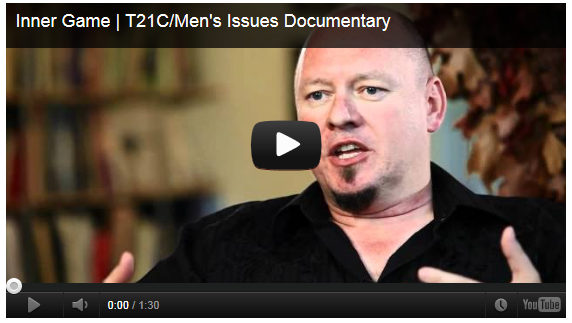
First Glimpse of the Socrates 21-Convention Documentary Interview Series!

First Glimpse of the Socrates 21-Convention Documentary Interview Series!

I’m excited to announce that Anthony Johnson has just put out for early consumption, two interview snippets of the documentary interview that was completed in early April. Personally I’m really anxious to see the final results, but more importantly I’m pleased that this interview will carry the discussion of self-improvement, self-actualization and the men’s community issues to a larger and more open audience.

First Glimpse of the Socrates 21-Convention Documentary Interview

I will also be a guest speaker at the Austin TX, 21-Convention in August. For more details of the 21-Convention and the three world-wide 21-Convention events this year, see the attached link. If I wasn’t a speaker, I’d be looking at a way to attend. While the talks are great, it’s the sidebar discussions, meetings and camaraderie amongst and with the attendees and speakers that I found to be really amazing. I’m looking forward not only to speaking at the event but meeting and talking with everyone there. For more information:

The 21-Convention