TSL Podcast Greg Swann


A Sunday afternoon spent in the Church of Splendor…

Sat down late this morning to wrap up my next blog post on ‘maintaining relationship quality’, which I’ve started and stopped a half-dozen times in the last three months… started to listen to this podcast from two mutual friends, to hear their voices again and immerse myself in the context of writing about ideas… and got lost hearing and being reaffirmed by shared values expressed in the podcast. Greg calls this church (the behavioral action of repeatedly going back again and again to remind yourself of what your values and virtues are and the acts of pursuing them). The more I think upon that and so many other ideas and convictions he shares the more I have to re-think so many ideas and ideals I once held so profoundly close. At times I’m uncomfortable with where I come up out of the rabbit hole, but I then remind myself that there is no growth in the comfort zone…

The Sexual Life Podcast-with Greg Swann

With all that being said, if I fail to post this evening it’s because I’ve chosen to spend more time with my friends, their ideas and contemplating those values as they are expressed in my life… and right now that is the most likely outcome…

Steve Mayeda- The Sexual Life

http://thesexuallife.com/the-philosophy-2/


Greg Swann

http://selfadoration.com/


Anthony & Marilee

By example.

This is an image of a man in command of his life, fully vested (having the rights to) and invested (contributed effort) completely in it. He’s become a remarkable man, living a notable life because of it. He didn’t start that way. Few of us do, but years back he took agency of his life and sought to seek and to verify his own truths, find his own way through life and to strive to become the individual he is today. It is truly remarkable due to the sincerity, conviction and conscious determination to do just that. Equally as remarkable, is that he openly shared his experiences, understandings and realizations with others and then brought together so many of us from different ages, passions and places to join him in doing the same (this blog is a direct testament to that).

It’s called leadership when you live by example and then inspire others by words and deed in efforts to support them in achieving their personal potential. It’s what makes Anthony such a valuable friend and mentor, he just doesn’t say what he knows or believes, but lives them. I intentionally created this blog to share my experience, knowledge and awareness of cultural and political context of the sexual market place, because of his influence. A very large and unspoken portion of what personally drives me is to make personal atonement to not only the people I hurt romantically in my past, because I wasn’t the man I wished I could have been and didn’t have the knowledge to voice what I can now, but also to also soothe and reassure my own insecurities, fears and anxieties about the very real risks, dangers and dis-incentives men face when facing committing to relationships in our current environment (and they are quite severe). What I am faced with by his example is a clear understanding of just how jaded, defensive and armored against living life I have become, especially with being trusting, vulnerable and open to real intimacy.

Anthony has in the past and continues even today to lavishly shower me with praise credit for sharing with him, what I knew, understood and believed about life and relationships which help lead him to Marilee and I am deeply touched by that recognition and sentiments. To be fair our relationship is far from one-sided and if anything the pendulum is now clearly swinging the other way. The stated goal and objective of this blog project for me was to “provide a stepping stone for men who desire to shape and author their lives and embrace the responsibilities in having committed relationships. In effect, those wishing to ‘Man Up!’, but doing so with wisdom and honed ability. I hope to be one voice, reaching a thousand lives, that will drive a revolution.” Tomorrow when Anthony and Marilee marry and commit their lives to each other, I will count them as my ‘first’ step towards that thousand, not because I haven’t helped others, or their level of commitment to each other, but because I have witnessed first-hand, thus know it to be true what happens when a man is determined to create the life he desires and in part I know I’ve been some of the steel that’s sharpened that man.

Ultimately what I am struck by is that as individuals we must be prepared for the realities of our world, but also learn to lay down our shields, to put down our spears, to feel the sunshine upon our faces and take our place under the sun, if we are to really live. Look again at the photo above and tell me you don’t see a remarkable man, living a remarkable life, because I sure do. …and he’s showing me by example. Our world needs far fewer Leonidas’ of the Men’s Rights Movement and more Anthony and Marilee’s. What an amazing gift they are giving each other and us as a consequence tomorrow.

300-Weathering the Storm


RELATIONSHIP MAINTENANCE


Man Looking Under Hood

“Your service life may vary…”


The culture of replaceability and technological obsolescence

As a culture, we’ve grown accustomed to industries and services that afford us the luxury of replacement over maintenance and repair. It is further enhanced by the love of new and evolving technologies over existing tried and true products that are developed and produced at affordable pricing to allow designed obsolescence. At best, it’s manufacturers who’ve created products that are intentionally designed to limit user maintenance, tune-ups and repair from their daily life and in many respects from the product’s service life almost entirely. We’ve also developed economies that afford us the tremendous ability to outsource those tasks and services that we would rather not due to nature of that labor, the environmental conditions of that labor, technical skill required to undertake those jobs and the time requirements associated with doing those functions. It’s a remarkable first world achievement. The hidden underbelly of this effect is that we are not cultured to the ideas, concepts or practices of maintaining other elements in our lives that need and require those skills and management abilities to flourish. We simply have excised the concept of maintenance from our lives. This cultural mindset has taken root into the sexual market place, where it is vastly easier to replace a partner than it is to learn the skills and management ability maintain a relationship, let alone repair deficiencies due to standard wear and tear, or exercise restraint in operational use to prevent a breakdown. The hidden cost is dramatically high, emotionally, financially and physically. This cost plays and radiates out from an individual personal level, to the family, into a cultural and ultimately within a society as a whole. The inability culturally to maintain and support personal relationship structures, such as marriages, has proven to collapse entire social cultures and threatens greater societies on a whole.

The nature of maintenance

Maintenance on a basic level accounts for operator observation to the performance of the system being utilized, the characteristics of the environment in which the system is being utilized and how that affects the system standards of performance and wear and tear expectations, the life cycle point of the system, standard conditional use benchmarks for inspections, testing and servicing of subsystems and to the servicing and replacement of subsystem faults, as they occur or ideally before they actually fault, as part of a service replacement schedule, to include integration of safeguarding practices. Having relationship maintenance skills and management protocols and abilities in place to ensure care, appropriate handling and servicing of the relationship and your partners needs will help afford for the relationship’s reliability, quality, longevity, provide increase relationship safety and to preserve invested relationship capital and equity.

Vehicle maintenance analogy

If we choose to use a vehicle as our model for a system, maintenance would start with the driver being cognizant of observable traits, characteristics and performance levels for the vehicle… He’ll notice when the tires a low, when the vehicle pulls to one side when being driven and the unique characteristics of the engine sounds as it moves along, accelerates and decelerates. He will also recognize the environmental conditions in which the vehicle is being driven will affect performance and maintenance requirements… stop and go traffic is very different from highway driving… not only will your mileage vary, but so to the wear and tear. Don’t get me started with racing and drifting… (It amazes me how many guys treat their relationships like something out of the movie Fast and Furious and are perplexed when they wreck it.) Likewise the life cycle point of the vehicle is important… simply the age of the vehicle will dictates the degree of maintenance requirements, as well as expected performance. Brand new vehicles need to be broken in and handled with care, as do antiques. Vehicles in their service years need increasing servicing, as the demands on their individual subsystems mounts (hydraulics, oils, belts, tires, brakes, transmissions etc..). These subsystems should be inspected and tested prior to anticipated fault points, not just evenly periodic intervals or mileage benchmarks. A hard driven vehicle pulling considerable loads will need more care and attention than if it was simply being taken out for weekend country drives. Lastly the operator will include safeguarding measures to prevent corrosion, ensure structural integrity, and safety considerations whether that comes in the form of washing and waxing a vehicle to prevent corrosion, the driving practices that limit damage, or the safety practices of wearing a seat belt and having appropriate insurance coverage. Intimate interpersonal relationships can draw directly from this analogy, even though the major subsystems will be quite dramatically different, the key then is knowing what they are.

Maintenance is not repair

Repairing a relationship once broken is not maintenance and should never be considered as such. Utilizing a system beyond its breaking point is terribly poor maintenance practice and management, yet that is precisely what most people do with their relationships because we lack the skills, experience and proven ability to do otherwise. Repair should be closely linked to a one-time costs and expenditure limits associated with brining the relationship back to fully serviceable condition. This is to ensure the appropriateness for one to make the repair in the first place, to obtain operational effectiveness afterwards and to make sure that a series of subsystem failures do not exceed one’s maintenance expenditure limits. Sadly people too often keep investing heavily in relationship repair when they shouldn’t be, that the repair are unlikely to result in operational expectations and that smaller sub-issue failures ultimately exceed the value of repairing the relationship. This isn’t to mean that there are not cases where it is entirely appropriately to completely salvage a relationship and completely re-structure, re-tool and to rebuild it, but those cases are few and far in-between and in the majority of the cases always involve children.

Willful misconduct

Worse off than negligence are those acts of willful misconduct either in damaging the relationship initially or through the consequences of our failure to appropriately manage the relationship repair once the initial damage is done. This occurs when we are hurt, angry and vengeful and we lash out in defiance to our partner, the situation and ultimately from the emotional dependencies from our past that are triggering and inflaming our response. When we harm our partner and our relationship in response to a relationship fault, we ultimately hurt ourselves. The inability to recognize and respond appropriately to boundaries, to control one’s emotional impulses and resolve personal emotional dependencies apart from relationship issues will invariably lead to the wrecking of the relationship, from our own accord, not from the original infraction. We are never justified in damaging others or our relationship in seeking a resolution to a fault or infraction. Relationships and partners handled in that regard don’t need repairing, should be classified as unserviceable and ultimately junked in quick order.


Pardon the interruption….

helen_smith_men_on_strike_cover


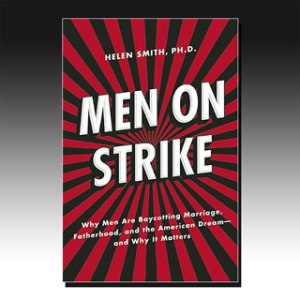
The political, cultural and economic reasons why men don’t want to marry…

I’m taking a quick break in protocol in providing a link to the following video due to the fact that it is culturally time sensitive and is remarkable in clearly addressing the current cultural dating environment that men are seeing and addressing.

“Men on Strike!”

The point of this blog is to give rise and response to those men who are determined to embrace their nature/biology and take the tremendous risks associated with committed relationships and to provide some guidance to meet those.

I am fortunate to have a number of supreme examples of loving, committed and healthy long-term relationships as a basis for review. They in many ways are my rock in this swirling current of cultural misandry. But just because there are several great examples out there, the true risks are incredible and likely. Men are not treated as equal during and after divorce and the consequences are just too great. The shamming language that comes with telling men in light of these realities to “Man up!” is deplorable, but if we are to change this situation or incentives, we must first understand the reality and then openly address it, individually and then as a society.

In the mean time, I and many men like me are taking note, that it’s never been better to be a single. Single women, who want a man and a family, would be well advised to understand the nature of today’s culture and proffer an adequate response to it, in meeting men half way.

helen_smith_men_on_strike_cover

MANAGING INTIMACY

relationship difficulties

“My friends tell me I have an intimacy problem, but they don’t really know me”

Love Songs, Ballads & Bullshit…

“One is the loneliest number that you’ll ever do.” With this opening lyric of a cover song made famous by Three Dog Night, reminds us in a vividly emotional way of the incredibly deep need to be seen, recognized, valued and connected with others, and in particularly, our choice of a paired mate. In fact, the need, desire and ambition of experiencing this level of intimacy is driving a multi-billion dollar segment of the music industry. While we can guffaw at love songs and ballads as bullshit, we wouldn’t be human without them. Love songs are not the only art form to recognize the power of intimacy and the primacy of touch; Michelangelo deftly depicted this when he painted the ceiling of the Sistine Chapel, where he chose to showcase God extending his hand and touch towards Adam to depict touch as the gift of life.

Our Biological Nature

We are a social creature by nature. It is part of our mammalian heritage to exhibit non-independent organizational patterns and to act in a social cooperative manner, seeking companionship, refuge and rejuvenation amongst members of their own kind. As a social species, we are ill-equipped to deal with all of life’s ordeals in a solitary manner and in its absence, it will adversely impact the quality and nature of one’s physical health, welfare and longevity, as many highly public health studies have pointed out.

Babies who wither and die and other not so happy-endings

Touch is a deep primal need. It is reflected in the manner in which we raise our young and while science is just getting around to formally recognizing this, it has long been understood that babies who are held, touched and caressed thrive, those that are denied tactile stimulation wither and die, as 13th Century German Emperor Frederick III, so callously observed in conducting empirical research during that time. While we appreciate an infant’s need to be held and touched in order to appropriately grow and develop emotionally and physically, we fail to realize that the need for connection and physical tactile stimulation never goes away, but don’t take my word for it. Even for the Manosphere this post struck a deep chord that resonated with many of us, because we know it to be true. We know of the dark places and of the abyss of isolation, alienation and desolation. Even if we’ve never been there ourselves, we know it exists, but never has it so openly been addressed, so directly within the community from someone who has journeyed there and returned. “Misogyny. No child was ever born with it”. Misogyny isn’t the worst that happens when we send our boys along this path. We should be lucky if misogyny is the only result.

In a world of 7 Billion people

In a world of 7 Billion people we are awfully alone. Technology has provided us ways in which to stay informed and abreast with society and culture at large and to create and to tap into social networks globally and locally, all the while increasing the rate of personal autonomy. Strangely the Information Age and Service Economies within it are driving and vastly increasing the emotional quotient requirements and proficiencies needed to succeed in them, yet we are progressively feeling more alienated and isolated from each other all the time, because we have not appreciated the fundamental shift taking place. Furthermore our criteria for intimate relationship development has shifted generationally from security, stability and child rearing and has moved into meeting our base emotional, physical and psychological needs for love and intimacy, with all things being equal with regards to attraction. If that wasn’t enough, there is a sexual based differentials in regards to needs when it comes to men and women; men are more visually, tactile and sexually based having an emphasis on physical intimacy and women have more need for emotional, intellectual and spiritual connection with their partner. All these factors are putting men squarely behind the power and learning curve and at a major deficit for dealing with relationships and women in their lives.

Primary Meaning

The quality of our closest relationships is often what gives life its primary meaning. There are few gifts more precious than listening to another person with empathy, especially during times of stress, anxiety, loss and uncertainty. While it is easy to recognize the value of close trusted relationship during hardships, we fail to appreciate that having the skills of empathy, understanding and compassion, in addition to managing those on a regular basis, actively plays a protective role in reducing stress, anxiety, anger and frustration within our partners. A lot of us avoid intimacy for any number of a variety of reasons, justifications and simple omissions. It’s natural to focus upon oneself, the issues at hand and the obligations of life, but when we do, we lose connectedness and intimacy with our partner. Done chronically and it can cost us more than just our relationship; it can cost us our families, our homes, our projected futures and can be the difference between a life of middle class and poverty for us and our children.

The Onion Theory

There’s a theory that intimacy is very much like an onion with five major wedge segments;

Intellectual– the sharing of thoughts, ideas, concepts and beliefs.

Social– the act of spending time together. Consider this portion to be a ‘verb’ , these are the things you do together. Focus on the ‘doing’.

Emotional– This is the sharing of the emotional responses we go through within our lives. How you feel about something.

Spiritual – While this is the least researched, it does pose significant impact and relationship with the other major segments of intimacy and thus overall relationship health and success. A mutual agreement with regards to spirituality isn’t a requirement, but an understanding and acceptance of your partner’s beliefs are.

Physical – sex will reign supreme here, but it is about all of our senses, their psychological and psychological responses and not just physical stimulation.

These segments researchers will consider the ‘breadth’ of intimacy when looking at the range of topics in which people share understanding and compassion with each other. This would be the ‘outside’ skin of the onion. The layers of the onion would be described as the degree of which trust and depth of sentiment that has been shared within a major segment and subject matter. When evaluating the degree of intimacy shared, this is commonly referred to as of ‘penetration’ which ranges from the superficial, intermediate, personal and finally to the core of one’s beliefs and being.

Infinite Possibilities

Intimacy therefore is not just a single element, but a range of major segments with infinite possibilities of subject matter and the depth for each is variable as well. We may open up about one subject deeply and on another subject, with the same person, not nearly as much. It is important to not to make sure that we’re intimate with our partners evenly across each wedge segment, but that we are intimate with our partners in the segment and manner of their preference and your partner should be attempting to meet your intimacy needs within the range in which you need and desire. Generally speaking men tend to value physical intimacy, which means our partners should focus upon the sensual feminine nature of the five senses; sight, sound, smell, touch & taste (hear that ladies?). Women generally tend to value emotional intimacy and the bonding and companionship that develops when we hear, comprehend and understand what they are experiencing, it’s impact on them and how that makes them feel. As men we’d do well to channel our inner Dr. Phil here.

Beware of the ‘Over Share’…

As with most elements within relationship building, we need to understand that there is an acceptable tempo at developing these relationships and levels of intimacy. Worse than having a deficient of intimacy (a lack of sharing) will be the dreaded ‘Over-share’, when someone advances the speed and depth of intimacy in too great of detail that we are comfortable with and accepting of. It will cause rejection, alienation and isolation as a result. We must fine tune our ability to read not only our partners, but the context and situation, as well, to give us clues as to the degree of appropriateness for disclosure. A supplicating beta male for example will have no problem over sharing emotionally with an immediate willingness to commit and as a consequence lose whatever attraction and desirability he may have had going for him. Likewise when a woman over shares sensually and physically she’s relegated to slut-dom.